The 2015 harvest was declared by the government as good as useless and efforts to mitigate hunger have been set aside. In addition to imports the government will purchase, the UK has given a country about 70 million for agricultural projects. No doubt all these efforts will go a long way to help people but in the mean time people are are trying to survive using means dangerous to the environment and from where i'[m standing we will very well regret not acting sooner. Today in a series of blogs to share the effects of drought in Zimbabwe i will share a story adapted from the
Newsday.
Thirty-seven-year-old
Berita Nyoni of ward 16 Ngamo area in Vungu Rural District Council
(VRDC) wakes up on a Friday morning with no food to give to her three
children. Worried that her kids might starve, she grabs a shovel and a
bucket and heads to Ngamo River where she joins a group of 40 women
already busy at work.

The women are trying to eke a living from sand poaching.
The work is, however, not easy. Berita has to scoop sand from the
river and deposit it on the riverbank. From the riverbank she uses a
20-litre bucket to heap it 10 metres away from the stream where truckers
can collect it.
“This is heavy work, but I have no choice as I need to feed my three little kids,” Berita said with a pale face.
A sand heap of about 30 20-litre buckets is sold for $30-$40 to sand
dealers. The sand dealers use lorries and other heavy trucks to
transport the product to Gweru where there is a ready market from
residential land developers.
For Berita sand poaching enables her to buy food as well as send her
children to school. Rains in the Midlands like other provinces in the
country ended prematurely and most of the crops are a write off.
Ngamo in Gweru peri-urban area is no exception.
“Our crops wilted from this season’s erratic rains and so we don’t
expect to harvest anything. So we should devise ways to survive and here
sand poaching is our only option,” she told
Newsday during an
Environmental Management Agency (EMA) media tour recently.
Though the women operate illegally EMA officials said they were
helping to prevent siltation in Ngamo River nevertheless the sand can be
washed back into the river if left uncollected.
EMA, however, said when the villagers go inland to extract river and
pit sand as well as stones without licences they cause serious
environmental degradation.
Provincial EMA information and publicity officer, Timothy Nyoka said
his office was having headaches caused by illegal sand diggers
particularly in Gweru peri-urban area.
“There is a proliferation of sand poachers in this area [Ngamo] and they have left land heavily degraded,” Nyoka said.
“It is difficult to arrest them as they come in the deep of the night with heavy trucks and dig for pit sand and stones.”
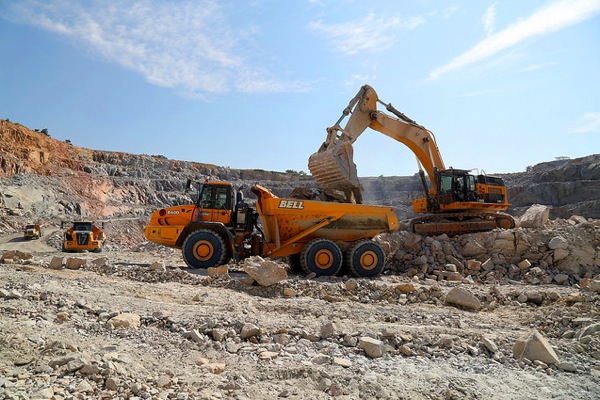
Ngamo area is now full of dongas as a result of environmental degradation from sand poaching.
“We only have 27 registered sites in Gweru where sand extraction is
carried out otherwise the rest operate illegally with no environmental
plans to reclaim the land they would have dug,” Nyoka said.
He said EMA was investigating a case on the outskirts of Mkoba suburb where a child drowned in the pits left by sand poachers.
Most farmers resettled in the area have also joined in sand excavation —
though legally — as they try to survive the harsh economic conditions.
Unlike the sand poachers the farmers have environmental plans to rehabilitate the land.
Environmental experts, however, say the reclaimed land would
never be restored to its original state.
“I realised that it was better to venture into sand extraction and do
business instead of losing out to illegal operators,” Kesari
Chidanhika, a farmer at Plot 65 said.

“We don’t expect much from the fields as the crops have wilted from
the erratic rains and sand extraction is one way we realised we can make
a living from.”
Another farmer at Plot 55, Martha Mugaviri, said she did not get
inputs in the last farming season and sand extraction was a better
alternative for her to earn a living.
Mugaviri, a widow, said besides the unpredictable rains, the soil in her plot was sandy and not suitable for cultivation.
“It is better that I venture into this business (sand extraction) so that I can improve both my homestead and fields,” she said.
Though Vungu Rural District Council has by-laws that govern and
protect the use of land under its jurisdiction it appears it is has no
capacity to ensure these laws are adhered to.
Quite moving, i know, but the environment will soon suffer. Were it not for global we wouldn't be facing this drought crisis. So right now today lets fight global warming and UP THE GREEN wherever we are to prevent any future effects.